
Screeds
The screed decides everything that comes after
A finished floor is never better than its substrate. We lay our screeds laser-levelled, monitor the drying, and the same team tiles afterwards — nobody inherits someone else's repair work.
What we do
Every type of screed, in the right place
Traditional screed
Sand and cement, pulled with a straightedge. Accepts slopes, recesses and variable thicknesses: the most flexible option in renovation.
Liquid screed
Self-levelling; wraps underfloor-heating pipes perfectly and gives constant flatness over large areas.
Insulated and floating screed
On thermal or acoustic insulation, with edge strips and movement joints in the right places.
Levelling and reprofiling
Bringing existing substrates back to level before tiling: a few millimetres that change everything for large formats.
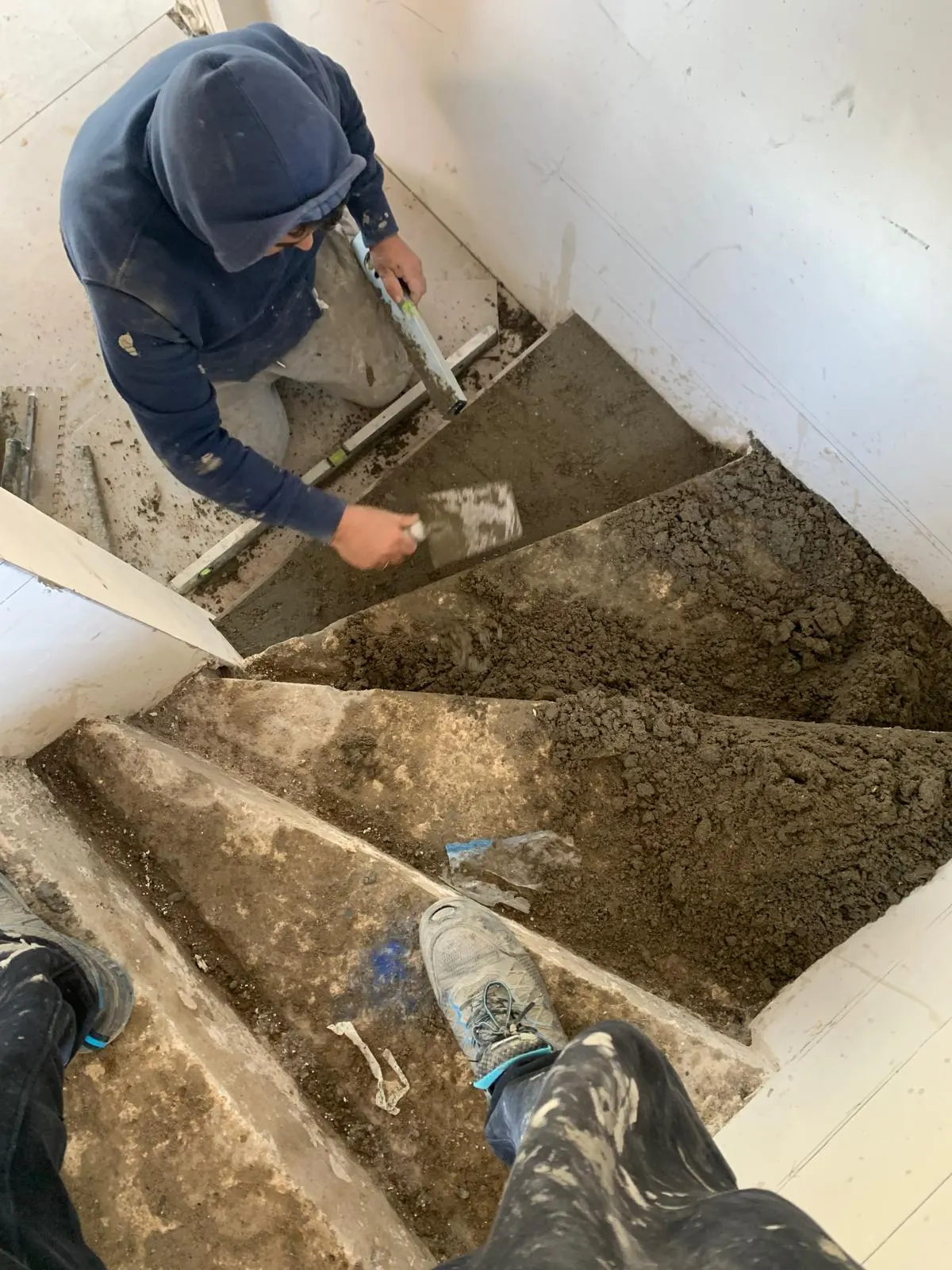
Screed on a staircase, before tiling
Frequently asked questions
Screeds: what we get asked
Traditional or liquid screed: which one to choose?
A traditional screed (sand and cement) accepts slopes and variable thicknesses: the default choice in renovation. A liquid screed (anhydrite or self-levelling cement) wraps underfloor-heating pipes better and dries more evenly, but needs a sealed, level substrate. We decide on site, based on the substrate and the planned floor covering.
How long must a screed dry before tiling?
Allow roughly one week per centimetre of thickness for a traditional screed, adjusted for ventilation and season. Tiling too early traps moisture and lifts tiles. We measure residual moisture before tiling — never by eye.
Do you lay screeds for underfloor heating?
Yes. Insulated screed, laid over the coils without moving them, correct cover thickness and a documented, progressive heat-up before the floor covering goes down. The same team then does the tiling, so no passing of responsibility between trades.
What flatness do you guarantee?
A tolerance of 2 mm under a 2 m straightedge, checked by laser. That is the precondition for laying large formats afterwards without excess adhesive build-up or lippage between tiles.
Quote
Tell us about your project
A photo and a rough measurement are enough for a first estimate — request a quote online or call directly.
0492 70 42 07Free quote · reply within 48 h